
Products
Processed Glass
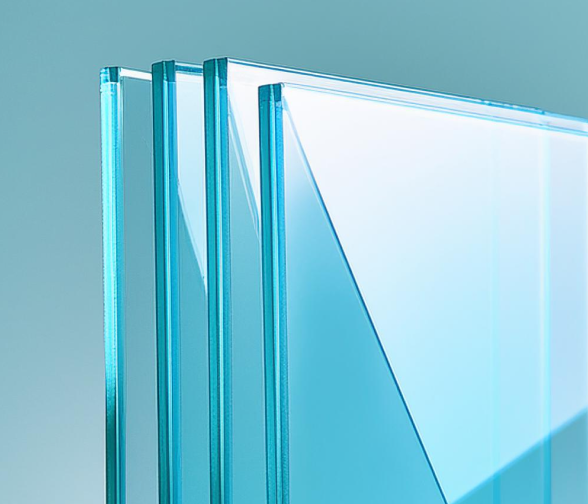
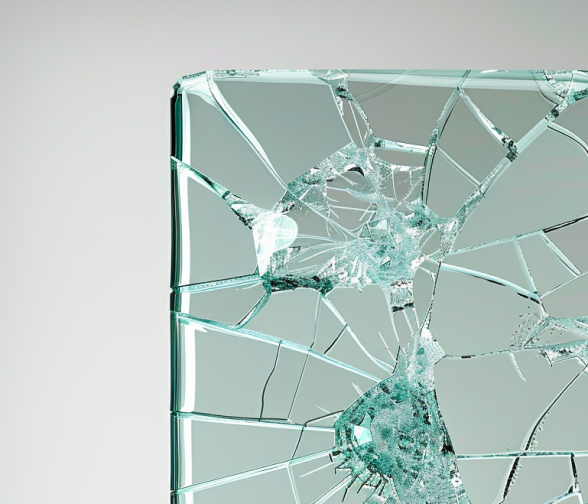
Laminated Glass
Laminated glass is produced by bonding two sheets of float glass together with a transparent interlayer.
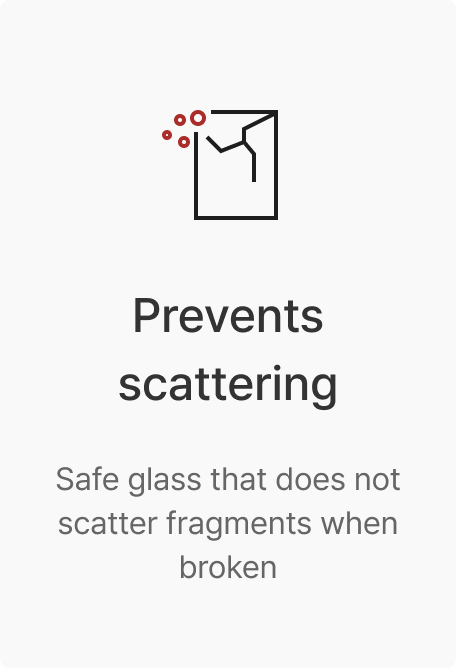
In the event of an impact, shards of the glass do not scatter and instead adheres to the interlayer which makes it safe, and due to its outstanding internal ductility, this glass is often used for security windows.
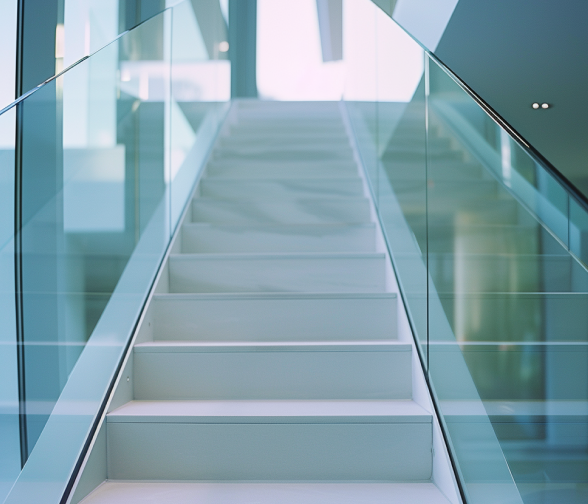
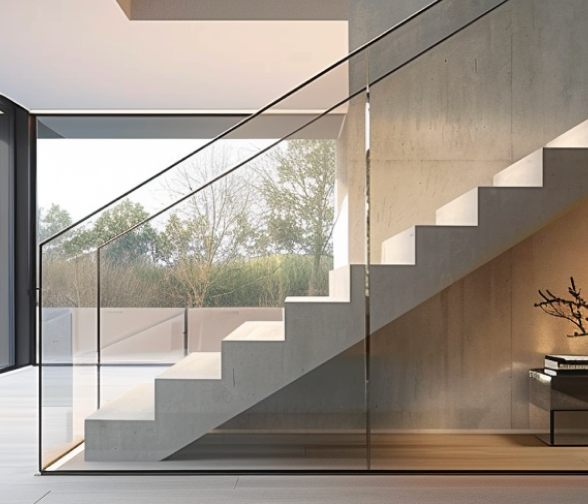
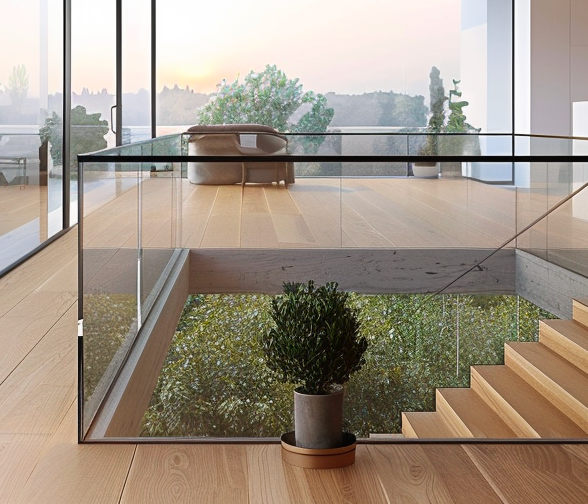
In addition, this product is often used for ceilings and banisters since the glass shards do not scatter on impact, and the glass is used as a structural glass when structural film is used.
Applications
• Building exterior, banister, ceiling, door, glass floor, places requiring safety, places requiring soundproofing
Color
• Clear, Green, Blue, Bronze, Gray
Specifications
• Maximum dimensions: 2,650mm X 4,500mm
* This may change, depending on the composition of the glass.
Key features

Precautions for Laminated Glass Installation
1. During installation, ensure the glass in contact with the floor is aligned to distribute load evenly. Particular care must be taken to prevent breakage due to self-weight in laminated insulating glass units.
2. For laminated double glazing, installation typically positions the laminated glass layer on the interior side. However, it may be installed on the exterior side if the primary purpose is to prevent outward dispersion of glass fragments in the event of breakage.
3. Minor air bubbles may occur at the edges during the manufacturing or cutting process; these do not constitute grounds for a claim.
Precautions for Processing Laminated Glass
1. When cutting laminated glass, a dedicated cutting machine must be used to ensure a clean cut.
2. Cut the two glass sheets so that the cutting deviation is within ±1mm.
3. If laminating film remains on the glass edge after cutting, it must be removed before further processing or installation.
4. When edge processing is required, use only wheels specifically designed for processing laminated glass edges.
5. During cutting and processing, avoid excessive force to prevent the laminating film from detaching or becoming damaged.
6. For toughened laminated glass or curved laminated glass, the lamination process follows heat treatment; heat treatment cannot be performed after lamination processing.